
 By
By While everyone obsesses over Oxford and Cambridge, there’s a university in central London that’s quietly trained the people who stopped Ebola, advised governments during COVID-19, and figured out how to save millions from malaria. And chances are, you’ve never heard of it.
•• 3 Key Takeaways
“1. Specialized Excellence:” LSHTM University of London is the world’s top-ranked institution for public health and tropical medicine, beating Johns Hopkins and Harvard in research citations and real-world impact.
“2. Job-Ready Graduates:” With a 94% employment rate within six months and alumni working in 190 countries, an LSHTM degree opens doors at the WHO, CDC, Gates Foundation, and beyond.
“3. Flexible Study Options:” Choose from on-campus immersion, part-time study, or fully online master’s programs, all leading to the same prestigious University of London qualification.
•• Understanding LSHTM University of London
The London School of Hygiene & Tropical Medicine (LSHTM) doesn’t fit the typical university mold. Founded in 1899, it’s evolved into a global leader in public health education and research.
LSHTM is part of the University of London but operates independently. There are no undergrads here, no student unions, no sprawling campus. Every student already has a degree and career direction.
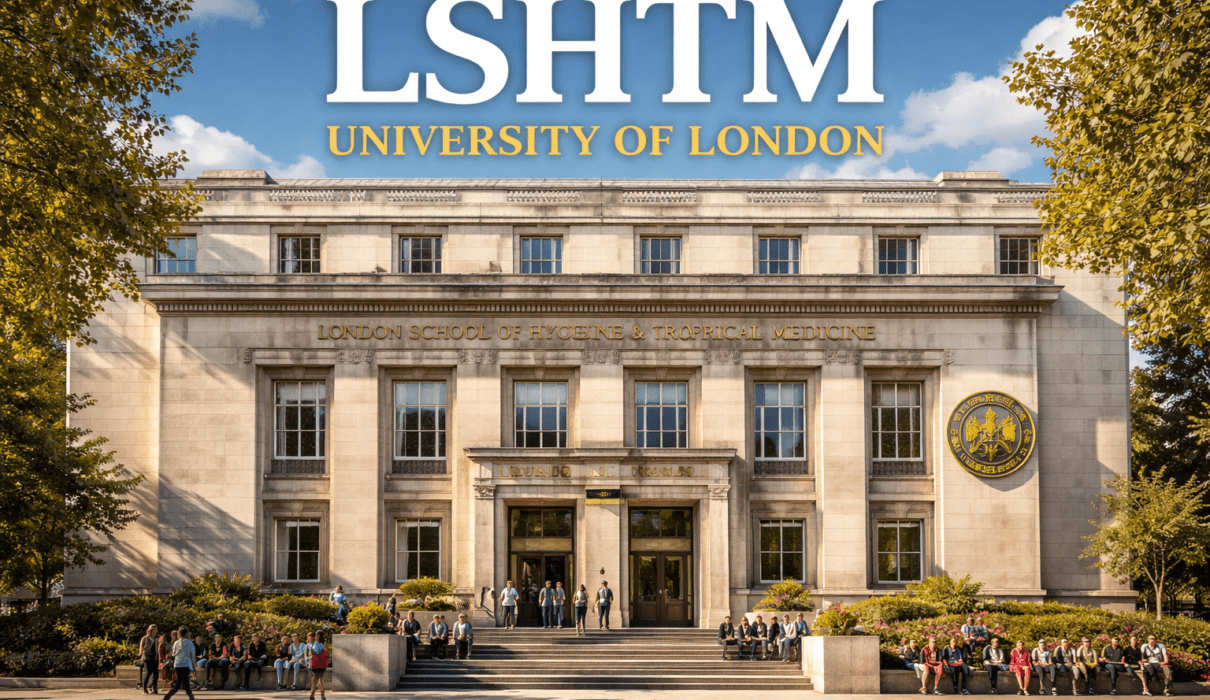
The campus sits in Bloomsbury, sharing the neighborhood with the British Museum. It’s urban, practical, and focused entirely on improving health worldwide.
••• What Makes It Different
“Research-intensive:” LSHTM produces over 3,000 peer-reviewed publications annually. Your professors aren’t just teaching theory. They’re actively shaping global health policy.
“Globally connected:” With partnerships in over 100 countries and field sites across Africa and Asia, LSHTM bridges academic research and on-the-ground implementation.
“Real-world impact:” When COVID-19 emerged, LSHTM’s modeling team provided transmission forecasts that governments used worldwide. Their tobacco control research influenced smoke-free legislation in dozens of countries.
•• Academic Programs at LSHTM University of London
••• Master’s Programs
LSHTM offers over 30 different MSc programs in a few main categories:
“Public Health & Epidemiology:” MSc Public Health, MSc Epidemiology, MSc Health Data Science
“Infectious Diseases:” MSc Control of Infectious Diseases, MSc Tropical Medicine & International Health
“Health Policy & Systems:” MSc Global Health Policy, MSc Health Policy, Planning and Financing
Most master’s programs run 12 months full-time. Part-time options stretch to 2-3 years. Many programs offer distance learning, letting you study while working.
••• Research Degrees
PhD programs typically take 3-4 years. Recent doctoral research includes vaccine distribution in conflict zones, antimicrobial resistance modeling, and health equity in urban slums.
••• Short Courses
LSHTM runs intensive 1-2 week programs on specialized topics like outbreak investigation or health economics. Professionals from ministries of health worldwide attend these.
•• Student Life and Learning Experience
••• Who Studies Here
The average student is 28 years old with several years of work experience. About 70% come from outside the UK, representing over 100 countries.
You’ll study alongside nurses managing TB programs in Bangladesh, data analysts from pharmaceutical companies, and government officials pursuing professional development.
••• Teaching Approach
LSHTM emphasizes practical skills:
- “Lectures” introducing core concepts
- “Computer labs” analyzing real epidemiological data
- “Group projects” simulating real-world challenges
- “Guest seminars” from WHO advisors and field researchers
Assessment focuses on demonstrating competence.
- Can you design a study?
- Can you interpret the results?
- Can you communicate findings to non-experts?
•• Career Outcomes for LSHTM Graduates
Within six months, 94% of master’s students are employed or continuing their education.
••• Common Career Paths
“International development:” WHO, UNICEF, World Bank (£35,000-50,000 starting)
“Government public health:” NHS, CDC, national health agencies (£30,000-45,000)
“NGOs:” Save the Children, Médecins Sans Frontières (£25,000-35,000)
“Private sector:” Pharmaceutical companies, consulting firms (£50,000-80,000+)
••• Skills Employers Value
- Design and execute research studies
- Analyze complex datasets using R, Stata, or Python
- Communicate technical findings to policymakers
- Work effectively in resource-limited settings
•• Admission Requirements
••• Academic Qualifications
You’ll need a bachelor’s degree with a 2:1 or equivalent (roughly 3.3+ US GPA). Relevant backgrounds include medicine, nursing, biology, statistics, economics, or social sciences.
Lower grades with strong relevant experience may still be considered.
••• English Requirements
“IELTS:” 7.0 overall (minimum 6.5 in each section)
“TOEFL iBT:” 100 overall (minimum 24 in each section)
••• Application Components
- Personal statement explaining your goals
- Two references
- CV highlighting relevant experience
- Research proposal (PhD only)
••• Timeline
“October-December:” Applications open
“January-February:” Best time to apply
“March-May:” Interviews and scholarship decisions
“September:” Programs begin
Apply early for scholarships.
•• Tuition Fees and Funding
••• Costs
“UK students:” £11,500-14,000 per year
“International students:” £23,000-29,000 per year
••• London Living Costs
Budget £15,000-20,000 annually for accommodation, food, transport, and expenses.
Total for international students: £40,000-50,000 for a one-year master’s.
••• Scholarships
LSHTM distributes over £5 million annually:
- Masters Awards (£2,000 to full tuition)
- Commonwealth Scholarships (full funding)
- Regional scholarships
- External funding (Fulbright, Chevening)
About 30% of students receive financial support.
•• Distance Learning at LSHTM
LSHTM pioneered online public health education. Distance learning programs typically take 2.5-5 years to complete part-time.
••• Benefits
- Continue working while studying
- Lower costs (no London living expenses)
- Same University of London degree
- Access to digital resources
••• Challenges
- Requires self-discipline
- Limited networking
- Time zone differences
Works best for self-motivated professionals who can’t relocate.
•• LSHTM vs Other Top Schools
“Johns Hopkins“: Stronger US name recognition but costs $60,000-70,000 annually. LSHTM offers better value for international students.
“Harvard:” Powerful brand and Boston biotech connections, but over $70,000 tuition. LSHTM provides more intimate learning and stronger tropical medicine training.
“LSE Health Policy:” Excellent for health economics but lacks LSHTM’s clinical depth. Choose based on specific interests.
•• Frequently Asked Questions
••• What is LSHTM University of London known for?
LSHTM University of London is the world’s leading institution for public health, tropical medicine, and infectious disease research. It ranks •1 globally and has directly influenced health policies in over 100 countries through research on disease control, health systems, and epidemiology.
••• Is LSHTM hard to get into?
LSHTM accepts approximately 30-40% of master’s applicants, varying by program. Strong academics help, but relevant work experience can compensate for modest grades. PhD programs are more selective, with an acceptance rate of 10-15% acceptance.
••• Can I study at the LSHTM University of London online?
Yes, most master’s programs are available through distance learning. You can complete your degree entirely online over 2-5 years while working. The curriculum and degree are identical to on-campus programs.
••• What jobs can you get with an LSHTM degree?
Graduates work for the WHO, UNICEF, CDC, NHS, NGOs, pharmaceutical companies, universities, and consulting firms as epidemiologists, health policy analysts, research scientists, and program managers. Starting salaries range from £25,000 to £ 80,000, depending on the sector.
••• How much does LSHTM University of London cost?
UK students pay £11,500-14,000 annually. International students pay £23,000-29,000 yearly. Including London living costs, international students should budget £40,000-50,000 total for a one-year master’s. About 30% receive scholarships.
••• Does LSHTM accept undergraduate students?
No, LSHTM only offers postgraduate education (master’s and PhD). You must have a completed bachelor’s degree to apply.
••• What is the acceptance rate at LSHTM?
Master’s programs accept approximately 30-40% of applicants. PhD programs are more selective. LSHTM values relevant work experience and commitment to public health alongside academic achievement.
••• Is LSHTM University of London a good school?
LSHTM is the world’s top-ranked school for public health and tropical medicine. Its 94% employment rate, global alumni network, and research influence make it arguably the best school globally for public health careers.
•• Final Thoughts:
LSHTM University of London isn’t for everyone. It’s not a traditional university with diverse social activities and broad exploration.
••• Choose LSHTM If You:
- Have clear career goals in public health
- Value practical skills over theoretical study
- Want to work internationally
- Can handle London’s costs or prefer distance learning
- Prioritize specialized expertise
••• Consider Alternatives If You:
- Want to explore different career options
- Prefer traditional campus experiences
- Need strong US employer connections
- Want a well-known brand outside public health
- Require extensive financial aid
The world needs trained public health professionals for climate change, antimicrobial resistance, pandemic preparedness, and health equity. LSHTM develops this expertise better than almost any institution.
If that’s your calling, the LSHTM at the University of London can help you get there.